

Over the past several years, many rental property owners have become used to an unusually strong market. Homes rented quickly, rents increased rapidly, and vacancies were often minimal. In many cases, simply putting a property on the market was enough to generate multiple applications.
But markets change.
Lately, there’s been growing concern about inflation, interest rates, layoffs, and whether the economy may slow down further. Whenever that happens, many landlords naturally begin asking the same question:
“What does this mean for my rental property?”
The good news is that rental housing has historically remained one of the more stable investment types during uncertain economic periods. People will always need a place to live. However, that does not mean landlords can afford to be passive — especially in a softer market.
In my experience, the owners who perform best during uncertain times are usually not the ones trying to squeeze every last dollar out of the market. They’re the ones who stay proactive, flexible, and focused on the long game.
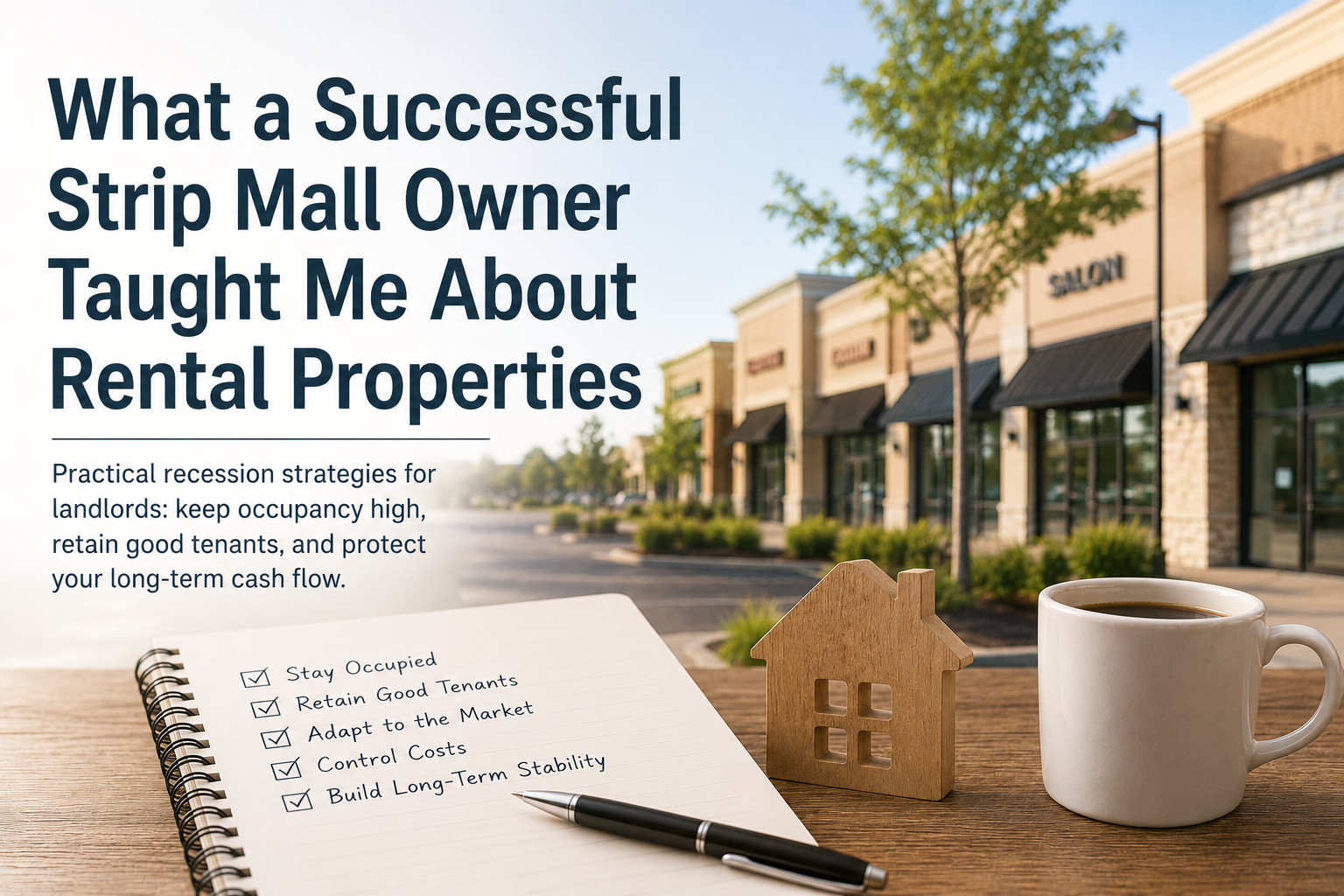
A Lesson From a Successful Retail Property Owner
One of the best examples of this mindset comes from a retail strip mall owner I’ve watched operate successfully for more than 20 years.
Over time, he built a portfolio of dozens of retail properties worth tens of millions of dollars. What always stood out to me was not just the size of the portfolio, but how consistently stable his properties remained through both strong economies and difficult ones.
Retail real estate can be a very challenging business. Tenant demand can fluctuate significantly depending on the economy, consumer spending, and local business conditions. Many retail property owners struggle through large swings in occupancy and cash flow during economic downturns.
But he approached the business differently than many others.
Instead of holding vacant spaces for long periods of time trying to achieve the absolute highest rent possible, his primary focus was keeping spaces occupied and maintaining steady cash flow. When the market softened, he adjusted pricing quickly and stayed competitive. When the market strengthened, he adjusted upward appropriately.
He understood that a vacant space often costs far more than accepting slightly lower rent from a good long-term tenant.
More importantly, he focused heavily on tenant retention. He worked to keep good tenants happy, avoided unnecessary turnover whenever possible, and recognized that vacancy and turn costs could quietly destroy profitability over time.
Watching him operate over the years reinforced something I’ve seen repeatedly in real estate:
The most successful long-term investors are often not the ones chasing every last dollar during strong markets. They are the ones building stable, durable operations that can perform through both good markets and difficult ones.
That same principle applies directly to residential rental properties today.
The Market Has Become More Competitive
One thing we’ve seen recently is that even well-priced homes can sometimes take longer to rent than owners expect.
A few years ago, inventory was extremely limited in many markets. Today, there is simply more competition. Residents have more options, and they are becoming more price-sensitive.
That doesn’t mean the market is bad. It just means strategy matters more now.
In a competitive environment, details become important:
- Professional photos
- Accurate pricing
- Fast response times
- Property condition
- Flexible showings
- Good communication
The homes that stand out and are managed proactively tend to perform the best.
Vacancy Is Often More Expensive Than Slightly Lower Rent
One of the biggest mistakes I see landlords make during slower markets is holding out too long for a higher rent amount.
Everyone understandably wants to maximize income from their investment. But in many cases, a property sitting vacant for several extra weeks costs far more than adjusting the price slightly and securing a qualified resident sooner.
A vacant property still has:
- Mortgage payments
- Utilities
- Landscaping
- Insurance
- HOA dues
- Maintenance exposure
And once a listing starts sitting too long, it can lose momentum in the market.
Sometimes the smartest financial decision is not achieving the absolute highest rent — it’s minimizing vacancy and keeping consistent cash flow.
Good Residents Become Even More Valuable
When the economy becomes uncertain, resident quality matters even more.
A reliable resident who pays on time, communicates well, and takes care of the property is incredibly valuable — especially in a softer market.
Because of that, I often encourage landlords to think carefully before pushing aggressive rent increases on good long-term residents simply because the market technically supports it.
Turnover is expensive. Cleaning, repairs, vacancy time, marketing, and leasing costs add up quickly.
In many situations, keeping a great resident is the better long-term financial decision.
Cash Reserves Matter More Than People Realize
One thing I’ve learned over the years is that rental properties tend to reward owners who stay financially prepared.
Even strong investments will occasionally experience:
- Vacancies
- Major repairs
- Insurance increases
- HVAC failures
- Unexpected legal or maintenance costs
Owners with healthy reserves typically make calmer and better decisions during uncertain periods because they are not operating from financial pressure.
Real estate works best as a long-term investment strategy. Having reserves allows owners to think long term instead of reacting emotionally to short-term issues.
Deferred Maintenance Usually Backfires
When the economy slows, some landlords understandably look for ways to reduce expenses. Unfortunately, delaying maintenance often creates much larger costs later.
Small issues tend to become large issues when ignored.
And from a leasing perspective, property condition matters more than ever in a competitive market. Residents today compare multiple homes online before ever scheduling a showing.
Well-maintained homes:
- Rent faster
- Attract stronger applicants
- Retain residents longer
- Reduce long-term repair costs
Especially here in Arizona, preventative maintenance on items like HVAC systems can save owners enormous headaches later.
Final Thoughts
Economic slowdowns can feel uncomfortable while they are happening, especially when the news cycle constantly focuses on worst-case scenarios.
But markets move in cycles. They always have.
The owners who tend to perform best over time are usually the ones who:
- Stay patient
- Maintain their properties
- Keep strong residents
- Adapt quickly to changing conditions
- Focus on stable long-term performance
A slowing economy does not mean landlords should panic. But it is a reminder that preparation, flexibility, and good management matter more than ever.
If you have questions about your property, pricing strategy, lease renewals, or how to position your rental in today’s market, Rentals America is always happy to help.