




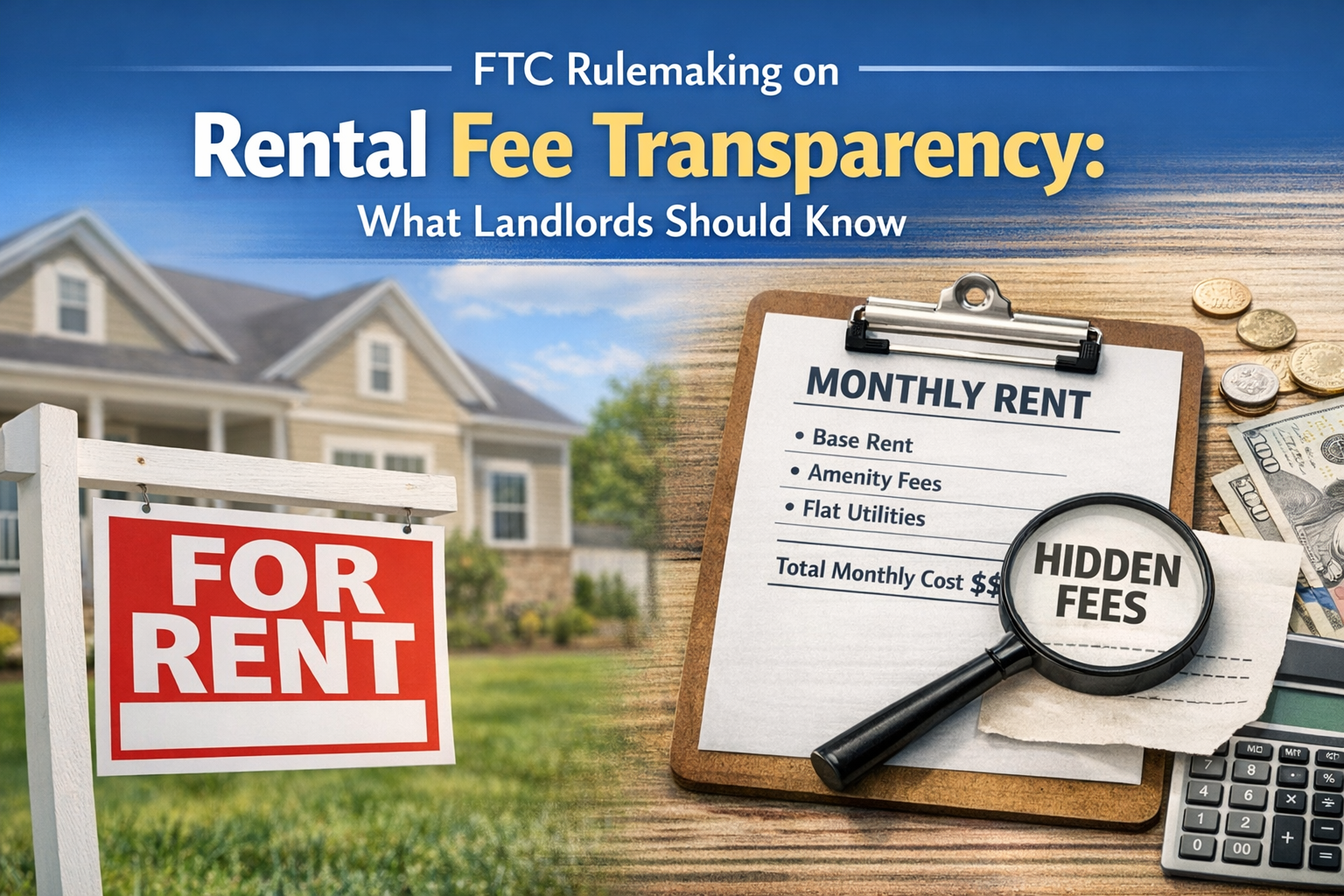
On January 30, 2026, the Federal Trade Commission (FTC) announced it is beginning the rulemaking process related to fees in the rental housing market.
Before going further, one key point:
Nothing has been implemented yet.
The FTC has only issued an Advance Notice of Proposed Rulemaking (ANPRM). There is no final rule, and the process could take months — or longer.
That said, the direction is clear enough that landlords would be wise to prepare now.
Why the FTC Is Focusing on Rental Fees
While the January 2026 announcement did not include detailed language, recent enforcement actions provide strong insight into where this is heading.
-
January 2025: The FTC filed suit alleging a landlord advertised a low base rent but failed to clearly disclose mandatory monthly fees, resulting in a higher true monthly cost.
-
December 2025: The FTC sent warning letters to 13 property management companies, indicating they may be violating federal law if they inhibit accurate pricing disclosure when marketing rental properties.
The consistent theme:
Consumers should know the full monthly cost of housing before they apply or pay anything.
What “Fee Transparency” Likely Means for Landlords
Based on the FTC’s prior actions, the agency appears focused on requiring disclosure of what is often called:
-
“Monthly Recurring Rent”
-
or “Total Monthly Rent”
This would likely include:
- Base rent
- Mandatory amenity fees
- Required internet or technology packages
- Mandatory monthly administrative charges
- Required flat utility charges
It likely does not include variable utilities (such as electric or water based on usage). However, if utilities are billed at a flat monthly rate, they should probably be included in the total.
Optional charges — such as pet rent or optional parking — should be:
- Clearly labeled
- Separately disclosed
- Identified as optional
The goal is apples-to-apples comparison shopping. A renter should be able to compare listings and understand the full monthly cost without surprises.
Timing: When Must Pricing Be Disclosed?
While no rule exists yet, enforcement signals suggest the FTC wants the total monthly recurring amount disclosed:
- In online listings
- On your website
- On listing platforms (Zillow, Apartments.com, etc.)
- Before an application fee is paid
- Before any administrative fee or deposit is collected
The focus is on preventing a situation where a prospect applies based on a base rent — only to discover mandatory charges later.
This Is Not a Rent Control Rule
It is important to clarify what this is not.
The FTC is not proposing:
- Rent caps
- Fee prohibitions (at least not yet)
- Limits on how you structure pricing
- Landlords can still:
- Adjust rents based on market conditions
- Structure amenities and service packages
-
Charge fees for legitimate services
The likely requirement is simply that whatever the resident must pay monthly is clearly disclosed upfront.
Why This Matters to Landlords
For small landlords, this may be simple: update your listings to reflect the true total monthly cost.
For larger operators or multi-state portfolios, compliance may require:
- Auditing all advertising channels
- Standardizing listing language
- Reviewing lease structures
- Coordinating disclosures across multiple platforms
Landlords who operate in multiple jurisdictions should also remember that state or local laws may already require similar disclosures.
Practical Steps Landlords Can Take Now
Even before a rule is finalized, landlords can reduce risk by:
- Calculating the true total monthly recurring rent.
- Advertising that number prominently.
- Separately listing optional fees.
- Disclosing mandatory upfront fees online.
- Ensuring leasing staff communicate pricing consistently.
Transparency reduces:
- Regulatory exposure
- Applicant disputes
- Negative reviews
- Chargebacks and complaints
And it builds trust.
Our Perspective for Landlords
In our view, this move by the FTC reflects a broader shift toward consumer transparency in housing.
For landlords who already operate professionally and disclose costs clearly, this should not be disruptive.
For operators relying on low base rents to drive traffic — while adding required monthly charges later — the environment may become more challenging.
In strong rental markets, transparency will likely improve lead quality. Prospects who apply will better understand the true cost, reducing friction at lease signing.
Bottom Line
There is no final rule yet.
But based on recent FTC enforcement activity, landlords should expect:
- Increased scrutiny of advertised rents
- Greater emphasis on full monthly cost disclosure
- Expectations that pricing be clear before application or payment
Preparing now is easier than reacting later.
Fee transparency is not just a compliance issue — it is a risk-management and reputation issue for landlords.
And those who lead with clarity will likely be better positioned if and when formal rules are adopted.
About Rentals America
Rentals America is a full-service property management company serving landlords across multiple markets. We focus on transparent pricing, strong compliance practices, and professional management designed to protect your property and reduce risk in an evolving regulatory environment.